Balancing Play Durations Against Volatility Levels in Slots and Table Games
Written by Yara Krause · Aug 5, 2026
Balancing Play Durations Against Volatility Levels in Slots and Table Games
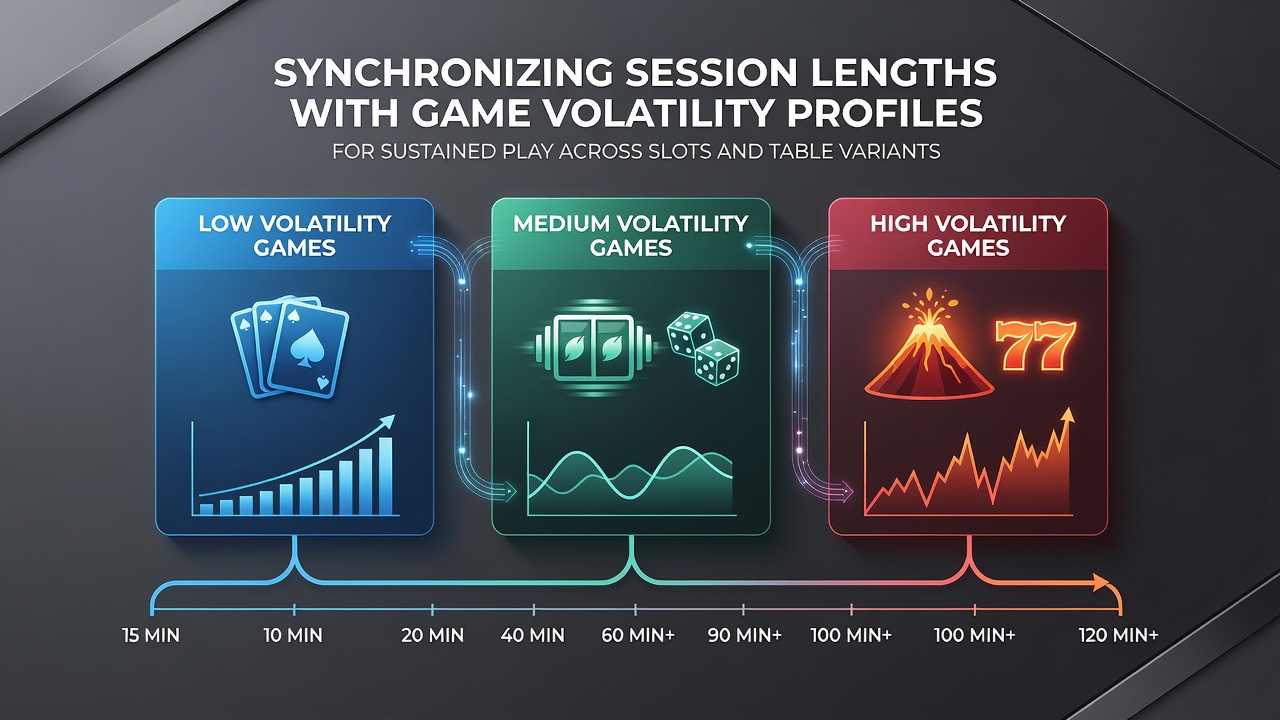
Operators and analysts track volatility profiles as a core metric when structuring player engagement across different game types, and data from industry reports indicate that slots typically register higher variance scores than table variants like blackjack or roulette. These profiles measure the frequency and magnitude of payouts, which in turn influence how long sessions can run before bankroll fluctuations become pronounced. Research from the American Gaming Association highlights that aligning session lengths to these profiles supports steadier participation rates, particularly as market data evolves through mid-2026.
Defining Volatility Across Game Categories
Slots fall into distinct volatility tiers based on return-to-player distributions and payout intervals, whereas table games operate within narrower ranges because outcomes derive from fixed probabilities and dealer interactions. High-volatility slots produce infrequent but larger wins, which means extended sessions can amplify drawdowns, while low-volatility options like certain baccarat side bets maintain steadier results over longer periods. Observers note that these distinctions become especially relevant when players move between machine banks and felt layouts in the same visit, because mismatched session timing can shift overall exposure patterns.
Studies conducted by university research groups show that volatility calculations rely on standard deviation metrics applied to historical outcome data, and these metrics help operators set guidelines for recommended play windows. For instance, a slot machine with a volatility index above 4.5 often pairs best with sessions under 45 minutes, whereas roulette wheels, which cluster closer to an index of 1.8, accommodate durations up to two hours without equivalent swings in net position.
Practical Adjustments for Sustained Participation
Players who adjust session lengths according to these profiles encounter fewer abrupt bankroll interruptions, and casino management systems increasingly incorporate volatility filters into loyalty program recommendations. Data collected across multiple jurisdictions reveals that sessions synchronized in this manner maintain higher average playtime per visit when compared against fixed-duration approaches. One analysis released in August 2026 by a North American gaming research center found that participants using volatility-matched timing extended their total engagement by roughly 18 percent without corresponding increases in loss rates.
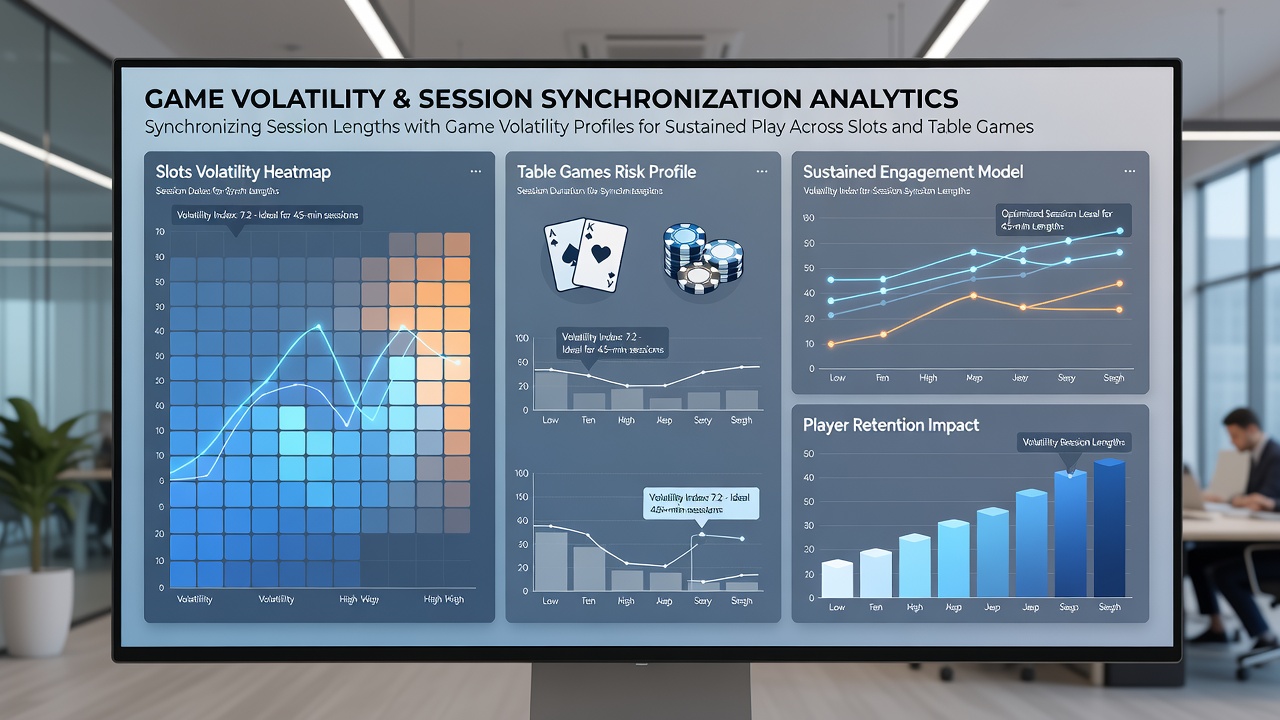
Table game variants introduce additional layers because side bets and progressive elements can temporarily elevate volatility above the base game level. Blackjack played with standard rules stays relatively stable, yet adding insurance or bonus wagers shifts the profile closer to medium-volatility slots. Operators therefore advise segmenting sessions so that high-volatility elements occupy shorter blocks within an overall visit, and this segmentation appears in training materials distributed to floor staff at major properties.
Cross-Game Bankroll Mapping Techniques
Mapping bankrolls across slots and tables requires tracking the cumulative variance that accumulates when players switch between game types. Figures from Canadian provincial gaming reports illustrate that players who allocate 60 percent of their session time to lower-volatility tables and 40 percent to higher-volatility slots achieve more consistent net results over repeated visits. Software tools now available on several platforms display real-time volatility estimates, allowing users to adjust remaining playtime on the fly.
Industry organizations such as the Gaming Standards Association have published technical briefs on integrating volatility data into session-management interfaces, and these briefs emphasize that the approach reduces the frequency of players exceeding preset loss limits. The same documents note that implementation across both land-based and online environments follows similar mathematical models, even though delivery methods differ.
Regional Data Trends Emerging in 2026
August 2026 updates from multiple oversight bodies show increased attention to session-length guidelines in regulatory filings, with particular focus on how volatility synchronization affects long-term player retention metrics. European markets report similar patterns, where operators who publish volatility-adjusted recommendations see measurable differences in repeat visit frequency. Academic papers examining these trends continue to stress the importance of transparent data presentation so that participants can apply the information directly.
Conclusion
Aligning session lengths with volatility profiles across slots and table variants rests on measurable differences in payout distributions and risk exposure, and available data supports structured timing as one factor in maintaining consistent participation. Operators continue to refine these approaches through ongoing analysis, while players gain access to tools that translate volatility scores into practical session boundaries. The result is a framework grounded in statistical patterns rather than fixed rules, adaptable as new game variants and market data emerge.