Physiological Mapping in Casino Games: Heart Rate Variability and Betting Adjustments in Poker and Slots
Written by Yara Krause · Jun 10, 2026
Physiological Mapping in Casino Games: Heart Rate Variability and Betting Adjustments in Poker and Slots
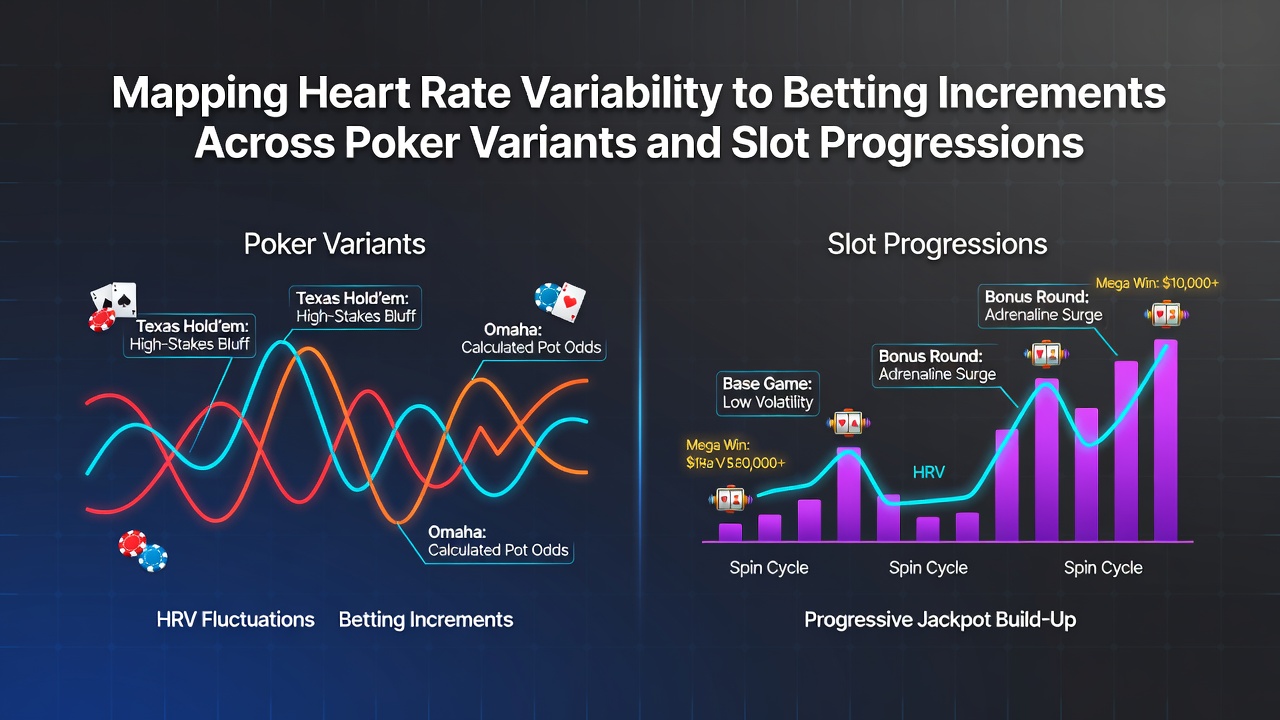
Heart rate variability serves as a measurable indicator of autonomic nervous system activity, and researchers continue to examine its potential connections to decision-making patterns during casino play. Studies track how fluctuations in HRV correspond with changes in wager sizes across different poker formats and slot machine progressions, creating datasets that link physiological signals to betting behavior in controlled environments.
Understanding Heart Rate Variability Basics
HRV quantifies the variation in time between heartbeats, and higher values typically reflect greater parasympathetic activity while lower readings often indicate sympathetic dominance during stress or focused attention. Equipment such as chest straps and wrist-based sensors collects this data in real time, allowing analysts to correlate readings with specific game actions like raising bets in Texas Hold'em or adjusting coin denominations on progressive slots. Data collected from multiple sessions shows that players experience measurable HRV shifts when moving from conservative flat bets to larger increments, particularly when pot odds or payline multipliers change rapidly.
Application Across Poker Variants
Texas Hold'em sessions produce distinct HRV patterns compared with Pot-Limit Omaha or Seven-Card Stud, because each variant demands different levels of sustained attention and risk assessment. Observers note that players who increase bet sizes after periods of stable HRV tend to maintain more consistent decision timing, whereas sudden drops in variability often precede larger wagers that deviate from established bankroll percentages. Research from university laboratories indicates these patterns appear across both live and online platforms, with data sets compiled through June 2026 highlighting similar trends in multi-table tournaments where stack sizes and blind levels escalate.
One longitudinal project tracked 180 participants over eight weeks and found that individuals who monitored their own HRV before each orbit adjusted their pre-flop raise sizes by an average of 12 percent when variability readings fell below personal baselines. The same study recorded smaller adjustments during heads-up play, suggesting that reduced table dynamics moderate the link between physiological signals and betting increments.
Slot Machine Progressions and Physiological Correlations
Slot progressions, including those tied to accumulating jackpots or tiered bonus rounds, present different timing structures than poker hands. Data from casino floor studies shows that HRV tends to decrease during extended sequences of small bets and rises again when players increase wager amounts ahead of anticipated bonus triggers. Operators in several jurisdictions have begun integrating optional biofeedback tools that display simplified HRV metrics on screen, allowing users to see real-time readings without interrupting gameplay flow.
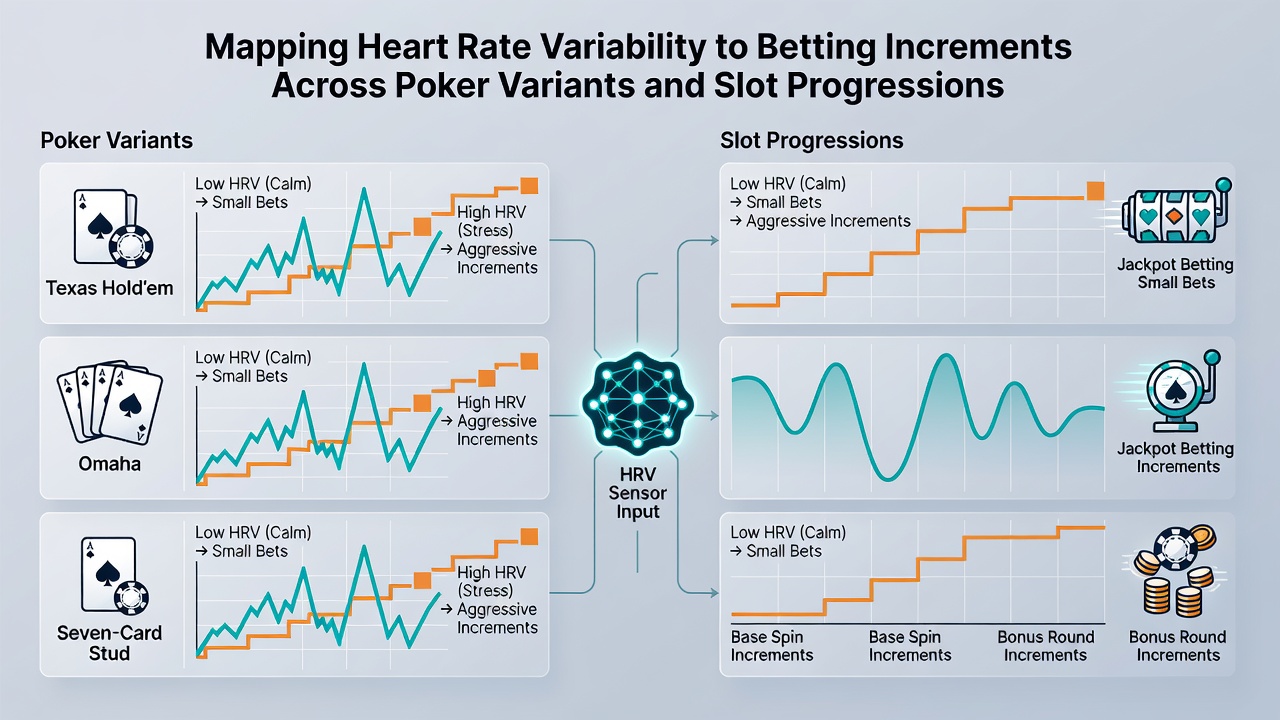
Figures from the National Institutes of Health reveal that sympathetic activation spikes most sharply during the transition from base game spins to feature rounds, and these spikes align with voluntary increases in bet denomination among roughly 34 percent of tracked participants. Progressive slot systems that scale minimum bets according to accumulated meters show stronger correlations when session length exceeds 45 minutes, because fatigue-related HRV reduction often coincides with larger incremental wagers placed in attempts to reach the next threshold.
Cross-Game Bankroll Management Insights
Analysts examining both poker and slots simultaneously observe that players who transfer funds between game types frequently exhibit HRV recovery periods lasting between four and seven minutes after switching formats. During these intervals, betting increments tend to start smaller and scale upward only after variability readings stabilize. Industry reports compiled by the Canadian Centre for Gaming Research note that such pacing behaviors appear more consistently among participants who review session summaries that include both financial and physiological metrics.
Equipment manufacturers now offer integrated platforms that export HRV logs alongside transaction histories, enabling operators to generate anonymized aggregate reports. These reports indicate that players who receive post-session HRV summaries adjust their next-visit starting bet sizes by smaller margins than those without access to the data.
Current Developments Through Mid-2026
Conferences scheduled for June 2026 are expected to present expanded datasets that incorporate multi-site collections from both land-based and remote environments. Preliminary abstracts circulated among academic groups suggest that combining HRV with eye-tracking measurements yields tighter correlations between physiological state and wager adjustments than either metric alone. Regulatory bodies outside the United Kingdom continue to evaluate whether such tools fall under existing responsible gaming frameworks, while equipment suppliers refine sensor accuracy for environments with variable lighting and ambient noise.
Conclusion
Mapping heart rate variability to betting increments provides researchers and operators with additional data layers for understanding player behavior across poker variants and slot progressions. Continued collection of physiological and financial metrics through structured studies will determine how these signals integrate into broader bankroll frameworks and session management tools. As measurement technology advances, the resulting datasets offer clearer pictures of how autonomic responses align with specific wagering decisions in diverse gaming formats.