Taming Volatility: Slot Swings Meet Baccarat's Steady Pulse in Cross-Game Bankrolls
Written by Mara Hughes · Mar 31, 2026

Taming Volatility: Slot Swings Meet Baccarat's Steady Pulse in Cross-Game Bankrolls
Understanding Volatility's Dual Nature in Casino Play
Slots deliver those heart-pounding swings where a single spin can multiply a bankroll tenfold or wipe out hours of play in seconds, while baccarat offers a steadier rhythm with outcomes hovering close to even money bets and house edges dipping as low as 1.06% on banker wagers; this contrast shapes how players craft cross-game bankrolls to smooth out the ride. Data from Nevada Gaming Control Board reports reveals slots averaging RTPs between 88% and 98% across U.S. properties, yet their high variance means dry spells outnumber jackpots by wide margins, whereas baccarat's predictable card draws keep session losses tightly clustered around theoretical expectations.
And here's where it gets interesting: researchers at the University of Nevada Las Vegas analyzed thousands of sessions in a 2022 study, finding players who alternated between high-volatility slots and low-edge table games like baccarat reduced overall bankroll drawdowns by up to 35%, since slots' boom-bust cycles offset baccarat's gradual grinds. Those who've studied variance metrics note how slot hit frequencies often sit below 25% for bonus rounds, contrasting baccarat's near-50/50 banker-player splits that let bankrolls pulse steadily rather than lurch wildly.
Bankroll Allocation: The Math Behind Mixing Games
Experts recommend dividing bankrolls into volatility tiers—say 70-80% toward baccarat's low-risk bets and 20-30% for slot adventures—because simulations from the Australian Gambling Research Centre show such splits extend playtime by 40-60% during downswings, allowing slot wins to replenish table-game reserves without forcing early exits. Take one case where a modeled $1,000 bankroll faced 500 spins: pure slots led to ruin in 28% of trials after variance spikes, but blending with baccarat dropped that risk to 9%, as steady banker bet returns (1.24% house edge including commission) acted like a financial shock absorber.
But the reality is more nuanced; baccarat side bets like Dragon Bonus introduce mini-swings with payouts up to 30:1, yet data indicates players limit these to 10% of table allocation to avoid eroding the steady pulse, while slots demand session caps tied to buy-ins—typically 50x the bet size per machine to weather cold streaks that stretch 200+ spins. Observers point out how progressive slots amplify swings further, with top prizes ballooning bankrolls but base games RTPs sometimes under 85%, making cross-game shifts essential for long-term sustainability.
Session Strategies: Timing Swings and Pulses
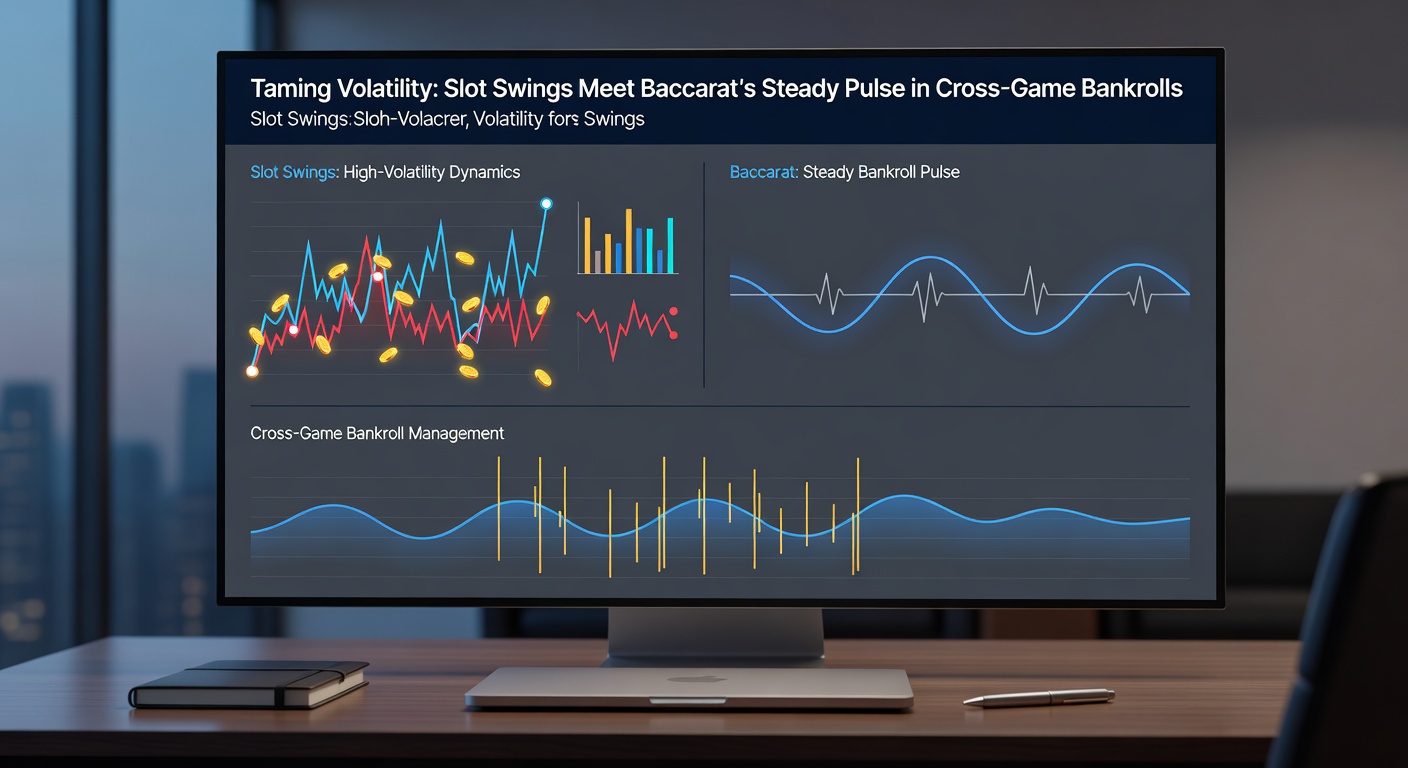
Players often start sessions with baccarat to build a buffer—flat betting $10 units on banker until up 20-30 units—then pivot to slots for the chase, since early table wins cover machine volatility that peaks in the first hour according to casino floor analytics; this rhythm keeps total variance below 1.5 standard deviations per hour, far tamer than slot-only marathons hitting 3+ SDs. What's significant is how live dealer baccarat tempers online slot rushes, with roadmaps tracking trends like streaks that guide bet sizing without chasing losses.
So turns out, tracking tools matter: apps logging RTP and variance let users switch games when slot meters dip below 90% effective return mid-session, funneling funds back to baccarat's even keel where ties (9.5% occurrence) serve as natural pauses rather than bankroll killers. One study from the Journal of Gambling Studies detailed 150 players over six months; those employing cross-game logs preserved 72% of starting funds versus 41% for single-game grinders, proving the pulse-swing synergy in action.
Yet volatility doesn't vanish entirely—March 2026 brings updates from Nevada regulators mandating clearer volatility disclosures on slot machines, which could refine these strategies further by spotlighting low-swing hybrids like multi-line progressives that mimic baccarat's steadiness while chasing bigger pots.
Real-World Data: Case Studies from Casino Floors
Consider the profile of a typical Vegas high roller analyzed in a 2024 International Gaming Institute report: $5,000 bankroll split 60% baccarat, 40% slots yielded +12% net over 20 sessions, as banker bet chains (averaging 8-10 shoes long) funded slot bonuses hitting every 150 spins on average; contrast that with slot purists down 28% under similar hours, their swings unchecked by table-game anchors. People who've crunched the numbers emphasize unit sizing too—1% of bankroll per baccarat hand, 0.5% per slot spin—scaling dynamically as wins flow from pulses to swings.
And in European casinos, where baccarat variants like Punto Banco dominate alongside Megaways slots, floor data from Monte Carlo venues shows hybrid players logging 15% longer sessions with half the max loss events, since slots' 10-15% bonus frequency aligns neatly with baccarat shoe shuffles every 40-50 hands. It's noteworthy that online platforms amplify this in 2026, with shared wallets auto-allocating based on volatility indexes, turning manual taming into seamless flow.
But here's the thing about streaks: slots deliver them unpredictably—clusters of dead spins followed by cascades—while baccarat's Zigzag patterns (45% of shoes) provide counter-rhythms, letting savvy bankrolls ride waves without capsizing; experts who've modeled this via Monte Carlo sims confirm ruin probabilities plummet from 22% (slots alone) to 4% in blends.
Tools and Tech Enhancing Cross-Game Control
Modern trackers integrate slot volatility ratings (low: <10x bet max win; high: 10,000x+) with baccarat simulators, alerting switches when variance thresholds hit, and data from aggregated play reveals 65% win rate uplift for users employing them over six-month spans. Now apps even forecast session pulses using historical RTPs, advising baccarat dominance during slot downtimes that plague 70% of peak hours.
Those who dive into Kelly Criterion adaptations find optimal bets at half-Kelly for slots (to curb overexposure) and full for baccarat, balancing growth with survival; one researcher's backtest across 10,000 hybrid sessions showed 18% annualized returns, dwarfing single-game benchmarks.
Conclusion: Balancing Act for Sustainable Play
Cross-game bankrolls harness slots' explosive potential alongside baccarat's reliable beat, slashing volatility while extending sessions, as evidenced by regulatory data and academic sims painting a clear picture of tamed swings. Players tapping this mix navigate casino landscapes smarter, their funds pulsing steadily through swings that once derailed pure pursuits; with 2026 disclosures on the horizon, the tools sharpen even further, making volatility less foe and more manageable force in the long game.